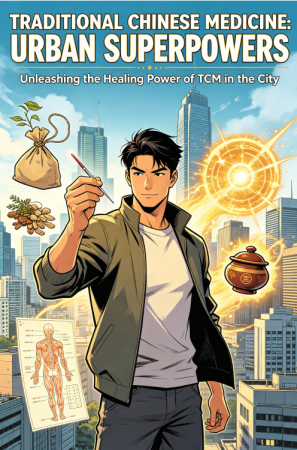
Traditional Chinese Medicine text Volume One: The World of Traditional Chinese Medicine - The Acupuncture Bronze Man, Chapter One: Healing Heart with Blood. As the ancients said: 'If you can't be a good prime minister, then be a good doctor.' Traditional Chinese medicine has existed s
- Book content
- Chapter list
Chapter 1
Traditional Chinese Medicine
text
Volume One: The World of Traditional Chinese Medicine - The Acupuncture Bronze Man, Chapter One: Healing Heart with Blood.
As the ancients said: "If you can't be a good prime minister, then be a good doctor."
Traditional Chinese medicine has existed since ancient times. It is not merely a medical practice, but also a study of the relationship between humanity and nature. It possesses the profound mystery of the Tao that can be spoken of, yet is not the eternal Tao. Precisely because of this, it has been cloaked in a veneer of "superstition" by modern people and almost entirely excluded from science.
Let's set aside our sentiments for now and begin the story.
This is a small town called Baihe Town. Surrounded by green mountains, with the Baihe River flowing eastward. Wansong Ridge lies to the southwest, and a stone arch bridge spans the Baihe River. It is truly a place of outstanding people and abundant resources; during the Ming and Qing dynasties, it produced more than a dozen top scholars (Zhuangyuan). Even in modern times, several prominent provincial officials hailed from Baihe Town. This small town boasts numerous historical sites, including Guanghe Temple in the south, a Song Dynasty building, and Niangniang Temple in the north, relics from the Tang Dynasty. The town also has many ancient houses, each with its own unique style. Coupled with its simple and honest folk customs and warm hospitality, it has recently developed into a well-known tourist attraction.
In Baihe Town, there was a traditional Chinese medicine clinic called Ping'an Hall, staffed by an old doctor named Song Heng, courtesy name Zihe. This Song Zihe was a renowned traditional Chinese medicine doctor in the area, well-versed in medical texts and proficient in internal medicine, surgery, gynecology, pediatrics, and acupuncture—a truly all-around medical master. Patients came not only from the local area but also from other provinces and even beyond. His treatments were often remarkably effective, and his reputation grew daily.
Song Zihe's medical skills came from his family; the Song family was a lineage of traditional Chinese medicine practitioners, and it produced a legendary figure: Song Zihe's grandfather, Song Jingchun. Do you know how the notorious traitor Yuan Shikai died? Legend has it that it was related to this Song Jingchun. Song Jingchun practiced medicine in Beijing, and even worked at the renowned Tongrentang Pharmacy, enjoying high renown in the city. The Song family possessed a secret ancestral technique—the Nine Needles of Resurrection—capable of bringing the dying back to life. It is said that once, while traveling in Shandong, Song Jingchun encountered a drowning man. His family found him downstream two days later. Although his body was not yet decayed, he was lifeless, and everyone assumed he was dead, busy preparing for his funeral. Song Jingchun happened to see him, exclaimed, "He can still be saved!" and then used the Nine Needles of Resurrection, miraculously reviving the man. This caused a sensation, and rumors spread that Song Jingchun possessed the ability to bring the dead back to life. It was only because the drowning person was not meant to die completely that Song Jingchun was able to save him with his divine acupuncture; otherwise, the truly dead person could not have been saved.
At that time, China's political situation was chaotic, with warlords carving up the country. To maintain the overall stability, Sun Yat-sen, the Father of the Nation, relinquished his rightful presidency to the rising star Yuan Shikai, hoping Yuan could reverse the current chaos. However, Yuan Shikai, after only a few days as president, felt unsatisfied and dreamed of becoming emperor. This sparked nationwide condemnation and rebellion, leaving Yuan Shikai in constant fear and anxiety on the throne. Overwhelmed by anxiety and anger, he fell ill. His physicians were extremely busy, prescribing various remedies, but none worked, leaving them helpless.
Left with no other option, they had to seek out another renowned doctor. The imperial physicians sifted through all the famous doctors in Beijing, narrowing it down to five, and ultimately choosing Song Jingchun. Upon receiving the imperial decree, Song Jingchun was intrigued. Ignoring the potential nationwide condemnation he might face, he gladly went.
Upon entering the Forbidden City, Song Jingchun met the large-headed "emperor." After examining him closely, he presented a prescription, saying, "Take ten doses of this prescription, and the emperor's health will be guaranteed!" With that, he accepted the imperial reward and left the Forbidden City with a sly smile.
Because the doctors were from outside the palace, the imperial physicians dared not prescribe medicine for the emperor without careful consideration. They first examined the prescription and found it consisted entirely of cooling and heat-clearing herbs, which suited Yuan Shikai's sudden onset of anger. Reassured, they proceeded with the prescription. Strangely enough, after taking two doses of the medicine prescribed by Song Jingchun, Yuan Shikai's condition improved significantly, and he was greatly pleased, awarding him a hundred taels of gold. At this time, rebellions broke out across the country, all demanding an end to his usurpation of the throne. Yuan Shikai, regaining his spirits, mobilized his troops and began to quell the rebellions.
Just over eighty days after Yuan Shikai became "Emperor," and exactly after he finished taking those ten doses of medicine, he suddenly flew into a rage, vomited several liters of blood, and died. Popular rumor circulated that this usurper died of anger, but little did people know there was another reason. The prescription given by Song Jingchun contained a hidden trick. Although the listed herbs were all meant to clear heat and reduce internal fire, a subtle change occurred during the decoction process. The effect of clearing heat and reducing internal fire was transformed into calming and suppressing internal fire, temporarily containing the inner fire within the body, building up to erupt after ten doses. When anger was aroused, the fire would surge directly to the brain, inevitably leading to death. Song Jingchun, audacious enough, used this opportunity to eliminate this usurper through the hands of a doctor. His medical skills were also extraordinary; the subtle changes in the combination of the herbs in the prescription reversed their effects, making them lethal to those whose condition was unsuitable. Even Yuan Shikai's "imperial physicians," skilled in medicine, could not see the mystery behind it. The essence of medicine lies in saving and killing lives.
With Yuan Shikai's death, his remaining supporters scattered like birds and beasts, and no one pursued Song Jingchun's responsibility. Meanwhile, Song Jingchun had already fled with his family to Baihe Town to live in seclusion. This kind of legend belongs to the category of unofficial historical accounts and may not be credible; readers should not attempt to verify its authenticity. It is written here simply to illustrate one point: medicine can not only save lives but also save a nation. Although Yuan Shikai ultimately failed to gain power, as long as he lived, he would inevitably wreak havoc on China.
Medicine is a skill that can save or kill; it all depends on how it is used. Killing a villain to heal the world is not necessarily a bad thing.
Now, let's talk about Song Zihe, who had a son named Song Qiang. Song Qiang studied medicine under Song Zihe and they jointly managed the Ping'an Hall. At the age of twenty-three, he married a woman, and the couple were deeply in love. She was also very filial to Song Zihe. The three of them, spanning two generations, lived happily together. However, tragedy struck. Less than a year into their marriage, Song Qiang was involved in a car accident and tragically died at such a young age. The driver who caused the accident fled the scene and disappeared without a trace. Losing his son in middle age was a devastating blow to Song Zihe. He endured immense grief and arranged h
……
Chapter 1
Chapter 2
Chapter 3
Chapter 4
Chapter 5
Chapter 6
Chapter 7
Chapter 8
Chapter 9
Chapter 10
Chapter 11
Chapter 12
Chapter 13
Chapter 14
Chapter 15
Chapter 16
Chapter 17
Chapter 18
Chapter 19
Chapter 20
Chapter 21
Chapter 22
Chapter 23
Chapter 24
Chapter 25
Chapter 26
Chapter 27
Chapter 28
Chapter 29
Chapter 30
Chapter 31
Chapter 32
Chapter 33
Chapter 34
Chapter 35
Chapter 36
Chapter 37
Chapter 38
Chapter 39
Chapter 40
Chapter 41
Chapter 42
Chapter 43
Chapter 44
Chapter 45
Chapter 46
Chapter 47
Chapter 48
Chapter 49
Chapter 50
Chapter 51
Chapter 52
Chapter 53
Chapter 54
Chapter 55
Chapter 56
Chapter 57
Chapter 58
Chapter 59
Chapter 60
Chapter 61
Chapter 62
Chapter 63
Chapter 64
Chapter 65
Chapter 66
Chapter 67
Chapter 68
Chapter 69
Chapter 70
Chapter 71
Chapter 72
Chapter 73
Chapter 74
Chapter 75
Chapter 76
Chapter 77
Chapter 78
Chapter 79
Chapter 80
Chapter 81
Chapter 82
Chapter 83
Chapter 84
Chapter 85
Chapter 86
Chapter 87
Chapter 88
Chapter 89
Chapter 90
Chapter 91
Chapter 92
Chapter 93
Chapter 94
Chapter 95
Chapter 96
Chapter 97
Chapter 98
Chapter 99
Chapter 100
Chapter 101
Chapter 102
Chapter 103
Chapter 104
Chapter 105
Chapter 106
Chapter 107
Chapter 108
Chapter 109
Chapter 110
Chapter 111
Chapter 112
Chapter 113
Chapter 114
Chapter 115
Chapter 116
Chapter 117
Chapter 118
Chapter 119
Chapter 120
Chapter 121
Chapter 122
Chapter 123
Chapter 124
Chapter 125
Chapter 126
Chapter 127
Chapter 128
Chapter 129
Chapter 130
Chapter 131
Chapter 132
Chapter 133
Chapter 134
Chapter 135
Chapter 136
Chapter 137
Chapter 138
Chapter 139
Chapter 140
Chapter 141
Chapter 142
Chapter 143
Chapter 144
Chapter 145
Chapter 146
Chapter 147
Chapter 148
Chapter 149
Chapter 150
Chapter 151
Chapter 152
Chapter 153
Chapter 154
Chapter 155
Chapter 156
Chapter 157
Chapter 158
Chapter 159
Chapter 160
Chapter 161
Chapter 162
Chapter 163
Chapter 164
Chapter 165
Chapter 166
Chapter 167
Chapter 168
Chapter 169
Chapter 170
Chapter 171
Chapter 172
Chapter 173
Chapter 174
Chapter 175
Chapter 176
Chapter 177
Chapter 178
Chapter 179
Chapter 180
Chapter 181
Chapter 182
Chapter 183
Chapter 184
Chapter 185
Chapter 186
Chapter 187
Chapter 188
Chapter 189
Chapter 190
Chapter 191
Chapter 192
Chapter 193
Chapter 194