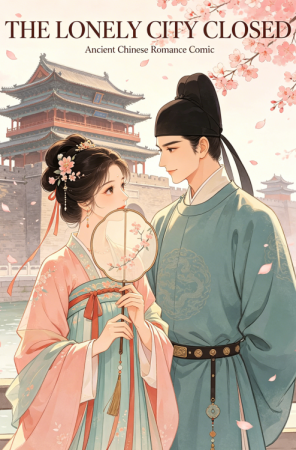
This is a story lost to history during the Song Dynasty; the emperor's beloved daughter chose the former. In the eyes of remonstrating officials like Sima Guang, the female protagonist of the story 'was not stern enough to obey her wet nurse, nor did she know the difference between gain
- Book content
- Chapter list
Chapter 1
This is a story lost to history during the Song Dynasty; the emperor's beloved daughter chose the former.
In the eyes of remonstrating officials like Sima Guang, the female protagonist of the story "was not stern enough to obey her wet nurse, nor did she know the difference between gain and loss. She indulged her desires without fear, repeatedly disobeying the orders of her sovereign and father, and disrespecting her husband's family," while the male protagonist "was not self-disciplined, and his transgressions were extremely grave. His sins were piled up like mountains, and he deserved to be severely punished." Their shocking love was hidden in the criticisms of these moralistic articles.
This is the story of Princess Yan, the eldest daughter of Emperor Renzong of the Northern Song Dynasty.
Princess Yan was Emperor Renzong's most beloved daughter for three reasons: First, Renzong had few children; all his sons died young, and only four of his thirteen daughters reached adulthood. Princess Yan was his eldest daughter, and due to the successive deaths of her younger siblings over several years, she was essentially the emperor's only child, naturally receiving immense favor. Second, the princess herself was extremely charming. The *History of Song* states that she was very "intelligent" from a young age. In the edict bestowing upon her the title of Princess Yan, the officials praised her, saying, "Her tranquility and virtue are radiant, her beauty radiant. Her intelligence is not due to external praise; her gentle nature is natural." Such a clever and beautiful girl naturally pleased her parents. Third, she was extremely filial to her father. When Renzong was critically ill in her childhood, she prayed barefoot to heaven in her grief, expressing her willingness to bear all the pain in her father's place. After Renzong recovered, he was deeply moved upon learning of this and showered his daughter with even greater affection.
Since he cherished the princess, Emperor Renzong was exceptionally careful in choosing a husband for her. At that time, the Khitan were eyeing the Song Dynasty covetously, and the Liao emperor repeatedly invaded the borders, demanding that the Song cede territory. Considering the Song emperor's deep affection for the eldest princess, he thought that marrying her would bring him a substantial dowry. Therefore, he proposed a marriage alliance, sending the princess to marry the Khitan prince, Liang Wang. Emperor Renzong naturally refused and sent his minister, Fu Bi, as an envoy to the Liao Dynasty. Fu Bi tricked the Liao emperor, saying, "In our Southern Dynasty, marrying off a princess doesn't cost much; the dowry is only 100,000 strings of cash each time. You will definitely lose money if you marry her." Upon hearing this, the Liao emperor realized he couldn't accept a losing proposition and abandoned the marriage alliance, agreeing to Emperor Renzong's terms of increasing the annual tribute by 100,000 taels of silver and 100,000 bolts of silk. Emperor Renzong spared no expense to keep his daughter. One wonders what would have happened if the two countries had actually arranged a marriage alliance. It should be noted that the Liang King who was originally to marry the princess of Yan was no ordinary man. His full name was Yelü Hongji. Perhaps this makes it clearer: he was the Khitan emperor who became sworn brothers with Xiao Feng in "Demi-Gods and Semi-Devils".
Having avoided the disaster of a political marriage, who should his daughter marry? Emperor Renzong carefully considered various options, ultimately setting his sights on his cousin, Li Wei. There was a reason for this: Emperor Renzong's birth mother was not Consort Liu, who raised him, but rather Consort Liu's maid, Li. Emperor Zhenzong once visited Consort Liu and, seeing Li's beauty and fair complexion, summoned her to his bedchamber. Li became pregnant and gave birth to Renzong. Consort Liu, having no children of her own, adopted Li's son and raised him, publicly claiming him as her own. Li did not contest the claim, silently keeping the secret until her death, never acknowledging Renzong's identity. This is the origin of the folk tale "The Prince Replaced by a Civet Cat."
After Emperor Renzong ascended the throne, Consort Liu naturally became Empress Dowager. Only after her death was someone told Renzong the truth about his birth mother. Renzong was deeply saddened and immediately posthumously honored Consort Li as Empress Dowager. He also sent people to find Consort Li's younger brother, Li Yonghe. Even bestowing official titles and generous rewards upon him was not enough. To express his remembrance and compensation for his mother, he decided to bestow his most beloved daughter upon his mother's family and arrange for Princess Yan to marry Li Yonghe's son, Li Wei.
Princess Yan was forced by her father's orders to marry her cousin, who was only a few years older than her. Unfortunately, this turned out to be a tragedy for her. This cousin, who was also the Imperial Son-in-Law, Li Wei, was of average appearance. Born into a humble family, he had only risen to prominence because of Emperor Renzong's mother. Lacking the air of a nobleman, he was disoriented upon marrying the princess, indulging in extravagant construction projects to build his mansion and associating with dissolute young men. He was often ridiculed by palace servants as a nouveau riche. Furthermore, he was taciturn and somewhat dull-witted, unable to express himself well. Although he devoted himself to calligraphy and painting, he always locked himself in his study to do so, never interacting with others. Princess Yan was extremely frustrated and looked down on Li Wei, regarding him as a servant, treating him coldly. There was no love between them whatsoever.
Subsequently, the unhappy marriage of Princess Yan and her dowry eunuch Liang Huaiji unfolded a shocking and tragic love story. The young Liang Huaiji initially served as a eunuch in the "Front Province," primarily working in the Hanlin Academy, the Hanlin Academy of Scholars, and the Secretariat-Chancellery. Later, he was transferred to the "Rear Province" (the Inner Palace Eunuch Province), serving the princess. While serving in the Front Province, he had ample opportunities to interact with scholars, literati, and renowned officials. He may have learned certain talents and, under the influence of these figures, even cultivated the elegant literary temperament that the princess admired. In any case, after spending considerable time with the princess and sharing drinks and confidants, a subtle affection gradually developed between them.
Prince Consort Li Wei probably turned a blind eye to their ambiguous relationship, but his mother, Lady Yang, couldn't stand it. This mother-in-law, Lady Yang, was worried about her son's marital relationship and had a petty, bourgeois nature, loving to gossip and pry into the privacy of her daughter-in-law, the princess, and Liang Huaiji. Once, when the princess and Liang Huaiji were drinking alone at night, Lady Yang peeked through the crack in the door. The princess discovered her and was furious. She immediately dragged Lady Yang out and beat her. Afterwards, she had a big fight with the prince consort. Presumably, the prince consort also hit her in his anger. The princess's pent-up resentment exploded at once. She immediately ran out of the princess's residence crying and knocked on the gates of the imperial city in the middle of the night to go inside and cry to her parents.
This caused a major scandal. Opening the palace gates at night had extremely serious consequences; anyone who opened them without imperial decree and approval through multiple procedures would be severely punished. The next day, the court and the public were abuzz with discussion, and officials repeatedly submitted memorials demanding punishment for the imperial guards. Meanwhile, the affair between Princess Yan and Liang Huaiji became a major scandal circulating both inside and outsi
……
Chapter 1
Chapter 2
Chapter 3
Chapter 4
Chapter 5
Chapter 6
Chapter 7
Chapter 8
Chapter 9
Chapter 10
Chapter 11
Chapter 12
Chapter 13
Chapter 14
Chapter 15
Chapter 16
Chapter 17
Chapter 18
Chapter 19
Chapter 20
Chapter 21
Chapter 22
Chapter 23
Chapter 24
Chapter 25
Chapter 26
Chapter 27
Chapter 28
Chapter 29
Chapter 30
Chapter 31
Chapter 32
Chapter 33
Chapter 34
Chapter 35
Chapter 36
Chapter 37
Chapter 38
Chapter 39
Chapter 40
Chapter 41
Chapter 42
Chapter 43
Chapter 44
Chapter 45
Chapter 46
Chapter 47
Chapter 48
Chapter 49
Chapter 50
Chapter 51
Chapter 52
Chapter 53
Chapter 54
Chapter 55
Chapter 56
Chapter 57
Chapter 58
Chapter 59
Chapter 60
Chapter 61
Chapter 62
Chapter 63
Chapter 64
Chapter 65
Chapter 66
Chapter 67
Chapter 68
Chapter 69
Chapter 70
Chapter 71
Chapter 72
Chapter 73
Chapter 74
Chapter 75
Chapter 76
Chapter 77
Chapter 78
Chapter 79
Chapter 80
Chapter 81
Chapter 82
Chapter 83
Chapter 84
Chapter 85
Chapter 86
Chapter 87
Chapter 88
Chapter 89
Chapter 90
Chapter 91
Chapter 92
Chapter 93
Chapter 94
Chapter 95
Chapter 96
Chapter 97
Chapter 98
Chapter 99
Chapter 100
Chapter 101
Chapter 102
Chapter 103
Chapter 104
Chapter 105
Chapter 106
Chapter 107
Chapter 108
Chapter 109
Chapter 110
Chapter 111
Chapter 112
Chapter 113
Chapter 114
Chapter 115
Chapter 116
Chapter 117
Chapter 118
Chapter 119
Chapter 120
Chapter 121
Chapter 122
Chapter 123
Chapter 124
Chapter 125
Chapter 126
Chapter 127
Chapter 128
Chapter 129
Chapter 130
Chapter 131
Chapter 132
Chapter 133
Chapter 134
Chapter 135
Chapter 136
Chapter 137