Spring outing Pang Di first met Wang Pang in the spring of the third year of the Xining era of the Song Dynasty. As Qingming Festival approaches, flowers bloom and willows sway in the breeze, carrying the fragrance of a light drizzle, the air still chilly despite the changing weather. O
- Book content
- Chapter list
Chapter 1
Spring outing
Pang Di first met Wang Pang in the spring of the third year of the Xining era of the Song Dynasty.
As Qingming Festival approaches, flowers bloom and willows sway in the breeze, carrying the fragrance of a light drizzle, the air still chilly despite the changing weather. Outside Bianliang city, a stretch of green hills and clear waters stretches out, and on the verdant paths, a continuous stream of people stroll along the paths to sweep tombs and enjoy the spring scenery.
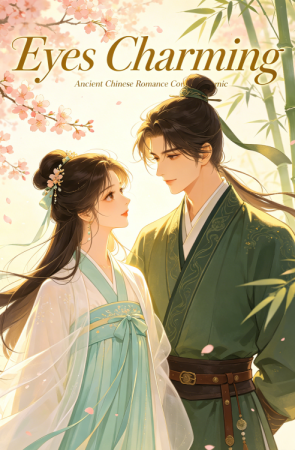
Among the travelers on the mountain, a young girl stood out. She wore a light green dress, a plain scarf tied at the waist, and a silk robe as thin as a cicada's wing with water-ripple patterns. On her head was a felt hat shaped like a conical hat, with a long white veil hanging down from the brim, obscuring her face. The long veil trailed behind her like a wisp of smoke. She rode a pure white steed, her figure graceful, slowly making her way along the mountain path. Several maids on horseback accompanied her, and a few servants followed closely behind.
As the group reached the mountainside, a sudden gust of wind swept in, causing the white horse to rear up and neigh. The girl held the reins and pulled the horse back, but the felt hat on her head was blown off by the wind and drifted down the mountain.
The young girl turned her head and looked back. Her beautiful eyes were clear and not seductive. Her beauty was like a newly blossoming flower. As soon as she showed her face, all the other beauties in the city were ashamed.
Seeing this, a maidservant asked, "Shall we go down the mountain to find the felt hat for Miss?"
Seeing that the felt hat had already drifted far away and disappeared from sight, the girl said, "The mountain road is winding and inconvenient. It's just an ordinary hat; there's no need to make such a fuss about it. Just take a piece of gauze from your bag and give it to me."
Another maidservant laughed upon hearing this, "That's not how it works. There are often stories in Tang dynasty anecdotes about young ladies leaving behind personal items like silk handkerchiefs and scented fans, which are then found by fortunate and talented men, leading to beautiful tales. If the felt hat left behind by the young lady were indeed found by some talented man, that would be fine. But if it falls into the hands of an ordinary peddler, wouldn't that be a waste of something the young lady once used? How could one not feel sorry for it?"
The young lady privately thought it made a lot of sense, but she frowned and deliberately scolded, "You can't believe you've come up with such ridiculous allusions for such trivial matters!"
The clever and quick-witted maidservant had already noticed the smile in her mistress's eyes. She turned her horse around and asked, "Miss, would you like to stay here and wait, or come with us?"
"Let's go together." The young lady was indeed very concerned about the fate of her hat falling off, thinking to herself, "It would be best if a pure and honest person could pick it up."
They searched all the way to the foot of the mountain before finding someone holding the felt hat with draped gauze, chatting and laughing with his companions.
The young man was about twenty years old, tall and slender, with exceptionally handsome features. He wore a long, flowing white silk robe that billowed in the wind, giving him an ethereal, almost otherworldly appearance. However, his complexion was overly pale, and he appeared slightly ill. The person standing beside him was quite different. Although about the same age as the young man in white, he was more agile, with sharp eyebrows and bright eyes. He wore a light ink-colored brocade robe, bound with a silver belt. One could immediately tell that he was from a noble family, yet he wore a sorrowful expression, as if burdened by something. The two stood side by side, like jade trees in the wind, each possessing their own unique beauty.
The young man in white smiled and said, "It's a rare treat to venture out of the city for a spring outing and to enjoy the delightful spring scenery. I've even found an exquisitely crafted gauze hat, its lining infused with a fine fragrance; it must have been left behind by a beautiful woman. Faced with such a scene, any unpleasantness should be completely forgotten. Brother Hao, why don't we play a drinking game and compose poems on this theme, betting the outcome on tomorrow's court discussion?"
The young man in black was quite surprised: "How does the betting work?"
"Compose half of a poem titled 'Chang Xiang Si' within seven steps, with no restrictions on rhyme. If you do, I will compose the other half according to the rhyme. If you lose, you must second my father's proposal tomorrow; if I lose, I will advise my father not to mention this matter again for three months."
"How can matters concerning people's livelihoods be treated so lightly?" the young man in black said solemnly. "Playing drinking games is fine, but the stakes must be changed."
The young man in white chuckled and nodded in agreement: "How about I use my Xiao Shi Seeking Phoenix Jade Flute to win over the twelve tricolor azaleas in your garden?"
The boy in black agreed, and the young man in white began to count. When he reached "seven," the boy in black raised his head and recited: "Leaving Yangguan, facing the green mountains, new wine flows in the desolate, warm sky, a thousand worries linger."
"The words are good, but they still carry the sorrows of the past, which spoils the mood," commented the young man in white.
The young man in black smiled wryly, "These are my thoughts. I am fully prepared to listen to Brother Yuanze's excellent work."
Just as the young man in white was about to speak, the young lady and her maid, who had been watching for a moment, dismounted and approached him, saying, "The hat in your hand belongs to my young lady. If you return it intact, I will be eternally grateful."
The young man in white looked over at the young lady upon hearing the sound. When their eyes met, he did not look away at her at all, but instead admired her appearance intently, a slight smile playing on his lips, as if he was quite pleased with what he saw.
The young lady was displeased, turned her head to the side, and looked angry, thinking, "How dare this person be so arrogant!"
The maid was also very angry when she saw this, so she rebuked her.
The young man in white then said to the maid, "Of course I will return it, but please wait a moment, young lady." After saying this, he went straight to the fortune teller who had set up a stall under the willow tree by the roadside to interpret the characters of tourists' names. He only said, "I'd like to borrow your pen and ink for a moment." Without waiting for the fortune teller's reply, he picked up the pen and wrote a few lines on the veil of his felt hat. He first showed it to the young man in black who was traveling with him. The two smiled at each other and then handed the hat to the maid.
The young lady took the felt hat from the maid and saw that what was being lifted from the veil was the second half of his poem "Longing for You," composed in accordance with the rhyme scheme of a drinking game:
"The little cloud servant girl is actually a beautiful girl, with spring mist on her brows, her beauty is bullying the cuckoo."
Although the poem clearly praises the young lady's beauty, she finds his frivolous and unruly behavior distasteful. She feels that the poem is rather frivolous, and he has placed it on his veil. The young lady finds even the felt hat disgusting, so she throws the hat on the ground and says, "Since it is already stained with ink, what use is it for me?" She then orders her servants to get up and head up the mountain without looking back.
The young man in white smiled and picked up the hat, saying to the boy in black, "Even if you don't want it, wouldn't it be better to just say you wanted it as a gift? Why waste it like this? This item is quite elegant, but unfortunately, its owner doesn't appreciate its charm. What a pity, what a pity."
Because of this lost hat, the two became entangled for half their lives, though no one expected it at the time.
This young man in white is Wang Pang, the son of Wang Anshi, the current prime minister.
Wang Anshi, courtesy name Jiepu, sobriquet Banshan, was a native of Linchuan, Fuzhou. He passed the imperial examination and entered officialdom during the reign of Emperor Renzong, the grandfather of Emperor Shenzong. While serving as a local official in Zheng County and Shuzhou, he made significant achievements, constructing dikes and dams, improving water and land transportation, and lending grain to the people at low interest rates, requiring regular repayment, earning him a good reputation. Later, recommended by officials in the capital, he entered the court as a judge under the Three Departments system. Upon arriving in the capital, he submitted a memorial to Emperor Renzong, advocating emulating ancient reforms to strengthen the country and enrich the people. However, Emperor Renzong ignored it, and Wang Anshi, disheartened, resigned and returned home under the pretext of his mother's death. After Emperor Renzong's death, Emperor Yingzong ascended the throne. Although he summoned Wang Anshi several times to serve again, he consistently declined, refusing to go to the capital. It wasn't until Emperor Yingzong's son, Emperor Shenzong Zhao Xu, ascended the throne that Wang Anshi returned to service.
When Zhao Xu ascended the throne at the young age of 20, he was ambitious and eager to implement reforms. At that time, Chancellor Han Qi was a veteran of three reigns, holding a high position and wielding great power. Consequently, some people inevitably spoke to the emperor about his autocratic ways. While Emperor Shenzong may not have entirely believed them, he was wary of Han Qi and was determined to use a newcomer to weaken Han Qi's power. Han Qi, hearing this, sighed and offered his resignation. Emperor Shenzong could not persuade him to stay and appointed Han Qi as Minister of Works and concurrently Grand Councilor, serving as the prefect of Xiangzhou. At this time, several officials brought up the matter of Wang Anshi again, strongly recommending him to Emperor Shenzong, claiming he possessed the talent of a chancellor. Han Qi went to the palace to take his leave. Emperor Shenzong asked him if Wang Anshi was suitable, and Han Qi replied, "Wang Anshi is more than capable as a Hanlin Academician, but not suitable for a ministerial position." Therefore, Emperor Shenzong summoned Wang Anshi to the capital and initially granted him the title of Hanlin Academician.
Wang Anshi gladly entered the court this time. During his dialogue with Emperor Shenzong, he compared the emperor to ancient sage rulers like Yao and Shun, and himself to virtuous ministers like Gaozu, Kui, Ji, Qi, and Fu Yue. He also spoke at length about the principles of learning from the past and reforming the present to manage finances effectively. Emperor Shenzong nodded repeatedly, accepting almost his entire proposal. The following year, ignoring the advice of veteran ministers like Tang Jie, Emperor Shenzong promoted Wang Anshi to the position of Vice Chancellor. Wang Anshi then petitioned Emperor Shenzong to adopt new laws to govern the country. Emperor Shenzong granted the petition and established the Bureau of Regulations for the Three Departments, responsible for planning the country's economy, changing old laws, and regulating the interests of the nation, placing Wang Anshi in charge. Wang Anshi then, together with his confidants Lü Huiqing and Zeng Bu, drafted eight articles of the new laws, namely:
I. Farmland Irrigation. Officials shall be dispatched to various regions to inspect farmland irrigation, reclaim abandoned land, dredge ditches and canals, and appropriately increase taxes. Officials and commoners shall perform the duties together, and no one shall conceal or evade responsibility.
Second, the equalization of transport: all official grain transported by prefectures and counties shall be subject to the principle of "the more expensive the grain, the cheaper the grain, and the closer the grain, the less the grain." If it is known in advance what the warehouses in the capital need to handle, the officials may purchase it at a lower price.
3. Green Seedlings. If farmers do not have money to sow green seedlings, the state will lend them money, with an interest rate of two percent, to be repaid to the state along with the summer and autumn taxes when the grain is ripe.
Fourth, exemption from corvée labor. People paid an exemption fee to the state according to their class and were exempted from corvée labor. The state then used the exemption fee to recruit unemployed people to serve as laborers.
V. Market Exchange. Market exchanges were established in the capital to allow merchants to purchase unsold goods from the government or exchange them with government goods. The government also provided loans to merchants, with interest to be paid and principal repaid within a specified period.
VI. Square Fields. Each square is defined as one thousand paces in each of the four cardinal directions. The land is measured and taxed according to its fertility or infertility, with five grades. The people pay taxes according to the tax rules.
VII. Baojia. Adopting the ancient militia system, ten households form a bao, and five hundred households form a dubao. Each dubao is headed by two officials, a chief and a deputy, who lead the baomen in storing bows and arrows and practicing martial arts.
8. Horse Protection
……
Chapter 1
Chapter 2
Chapter 3
Chapter 4
Chapter 5
Chapter 6
Chapter 7
Chapter 8
Chapter 9
Chapter 10
Chapter 11
Chapter 12
Chapter 13
Chapter 14
Chapter 15
Chapter 16
Chapter 17
Chapter 18
Chapter 19
Chapter 20
Chapter 21
Chapter 22
Chapter 23
Chapter 24
Chapter 25
Chapter 26
Chapter 27
Chapter 28
Chapter 29
Chapter 30
Chapter 31
Chapter 32
Chapter 33
Chapter 34
Chapter 35
Chapter 36
Chapter 37
Chapter 38
Chapter 39
Chapter 40
Chapter 41
Chapter 42
Chapter 43
Chapter 44
Chapter 45
Chapter 46
Chapter 47
Chapter 48
Chapter 49
Chapter 50
Chapter 51